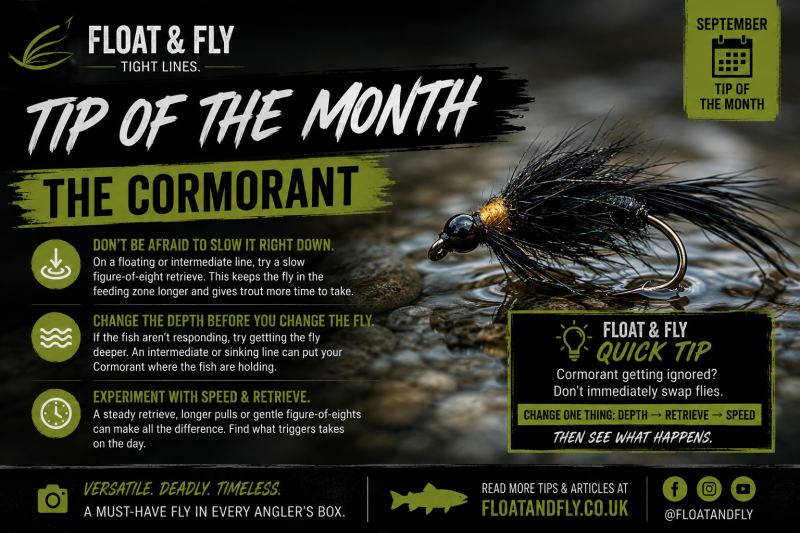
SEPTEMBER TIP
FLOAT & FLY — TIP OF THE MONTH
Get More From Your Cormorant
Don’t be afraid to slow it right down.
Cormorants are incredibly versatile. On a floating or intermediate line, try counting the fly down to the depth you’re targeting, then use a slow figure-of-eight retrieve. This keeps the Cormorant in the feeding zone longer and gives trout more opportunity to take.
If the fish aren’t responding, change the depth before changing the fly.
For deeper fish, an intermediate or sinking line can get the Cormorant down, where a steady retrieve or longer pulls can bring it back through the feeding zone.
💡 FLOAT & FLY QUICK TIP
Cormorant getting ignored?
Don’t immediately swap flies.
Change one thing:
Depth → Retrieve → Speed
Then see what happens.
Tight lines
AUGUST TIP
🎣 Tip of the Month: The "Match the Hatch" Trick for Coarse Anglers
We often associate "matching the hatch" strictly with fly fishing for trout. But right now, in the late-summer heat, coarse anglers targeting roach, rudd, and chub should be stealing this exact mindset.
During bright, warm days, fish spend hours cruising right beneath the surface film, feeding on falling terrestrial insects like flying ants, beetles, and midges. If you are blindly casting a heavy line or dropping heavy groundbait to the bottom, you are fishing under the feet of your target.
The Tactic: De-Grease and Slow the Fall
To target these surface-feeders using traditional coarse gear, you need to mimic a natural insect slowly drifting down from the surface.
- Ditch the Shot: Move your split shot up your line right beneath your float. Leave your hooklink completely unweighted so your bait falls at a painfully slow, natural pace.
- De-Grease Your Line: Rub a bit of mud or specialized line de-greaser on your nylon hooklink. This breaks the surface tension, allowing the line to sink invisibly without pulling the bait down too fast.
- The Perfect Bait: Thread a single caster, a piece of floating punched bread, or a real dead maggot on a lightweight fine-wire hook (Size 18 or 20).
The Result
Your bait will enter the water and slowly flutter downward, perfectly mimicking an insect that just fell from an overhanging tree. Cruising fish will intercept it instantly on the drop before it ever hits the bed.
Create Your Own Website With Webador