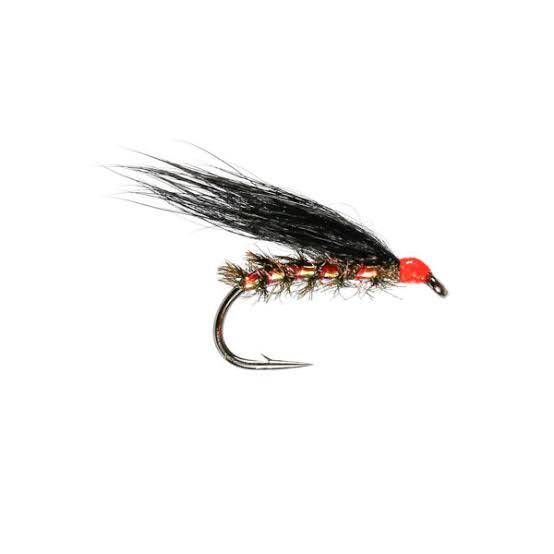
The Cormorant
What is a Cormorant Fly?
- Design: It features a slender body (often peacock herl or holographic tinsel), a wire rib, and a soft, sparse marabou wing tied over the back.
- Origin: Invented by Andy Lunn in the UK and later refined by competition anglers on waters like Grafham, it gets its name from its dark, fish-like profile rather than imitating an actual bird.
- Versatility: Depending on the size, color, and retrieve speed, trout mistake it for a chironomid pupa, corixa, damselfly nymph, or small fry.
How to Fish the Cormorant
- Rigging: Fish it as part of a team of three flies on the droppers, often paired with an attractor pattern (like a Blob or Booby) on the point.
- Retrieve: Use a slow, steady figure-of-eight retrieve so the marabou wing breathes and pulses naturally in the water.
- The Hang: Always pause and hold your flies completely still for several seconds at the very end of your retrieve before lifting for a new cast, as trout frequently strike as the fly pauses and rises

the Diawl bach
Best way to fish a Diawl Bach is a slow figure of eight retrieve
- Cast out and let the fly sink.
- Start with a very slow figure-of-eight retrieve.
- Keep the fly moving, but barely.
- Every so often, pause for 2–5 seconds.
- A lot of takes come as the fly starts moving
If you’re not getting anything, don’t immediately change the fly, vary the depth
Try:
- 1–2 ft down — if fish are visibly cruising or rising.
- 3–5 ft down — a good starting point.
- Deeper — if the water is cold or fish aren’t showing.
Create Your Own Website With Webador