Scotland’s Salmon Crisis: What Does It Mean for Anglers?
Scotland’s Salmon Crisis: What Does It Mean for Anglers?
WELCOME TO FLOAT & FLY
Float & Fly is built for anglers, by anglers.
Discover fishing news, practical tips, destinations, tackle recommendations and the latest from the UK angling scene.
Whether you’re chasing trout on a river, casting for pike or simply looking for your next fishing adventure, Float & Fly is here to help you find it.
Tight lines.

Hand-tied fishing flies made for anglers who want confidence in what’s at the end of their line.
Browse our growing range of patterns, tied with care and ready for your next session.
Made to order. Built to fish.
FISHING NEWS
The latest stories, developments and talking points from the UK angling world.
FISHING TIPS
Practical tips, techniques and ideas to help you get more from your next session.
Fishing Destinations
Discover places to fish, explore and plan your next angling adventure.
Stay up to date with the newest articles, tips, and stories from the Float & Fly team. We regularly publish fresh content to help you improve your skills, discover new techniques, and get the most out of your fishing trips.
Our Blog
21 Sept 2026 18:01
Scotland’s Salmon Crisis: What Does It Mean for Anglers?
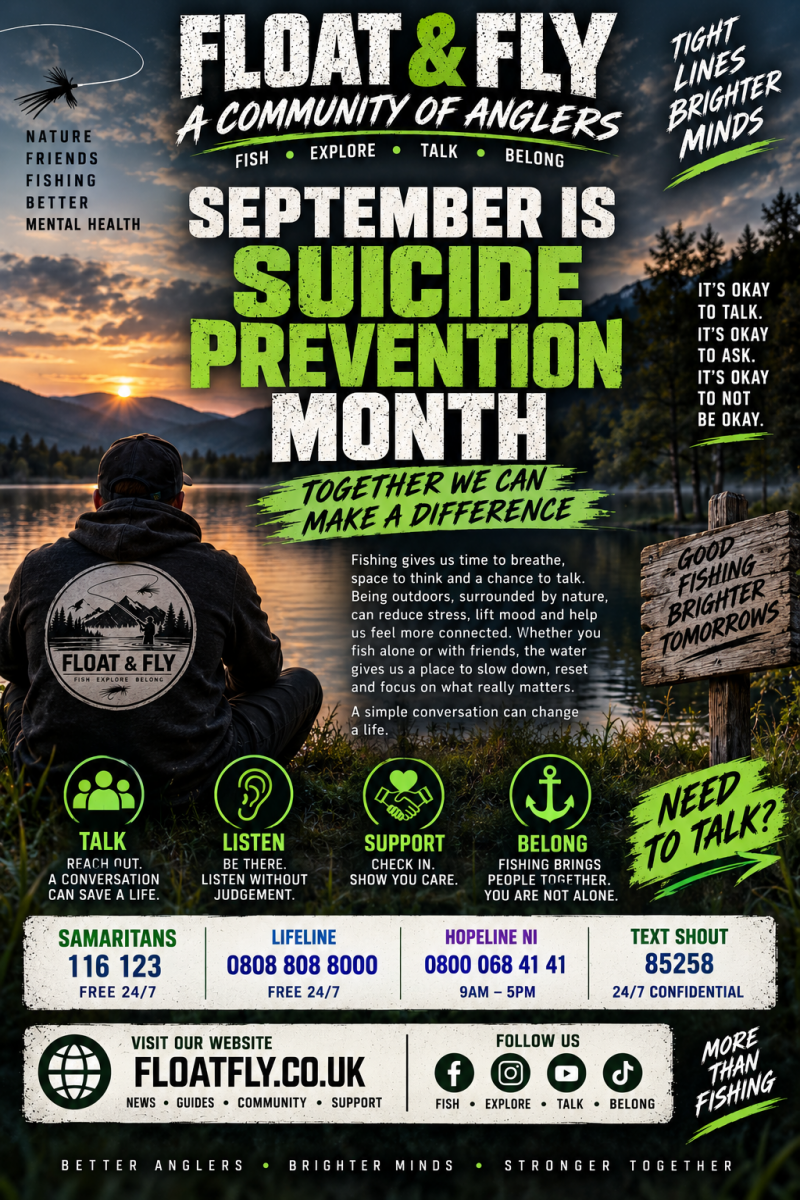
Fishing is about more than catching fish. It gives you a reason to step away from the noise of everyday life, spend time outdoors and simply breathe. Being beside the water, surrounded by nature, can help clear your head and give you space to slow down and reset.
For some people, fishing provides something just as important: time to think without pressure. Whether you’re fishing alone or sharing the bank with friends, it can create an opportunity to talk, listen and connect without judgement.
You don’t need to have all the answers, and you don’t even need to catch a fish. Sometimes, sitting beside the water with a rod in your hand is enough to make a difficult day feel a little easier.
Float & Fly — more than fishing. A community where we can talk, listen and support each other.
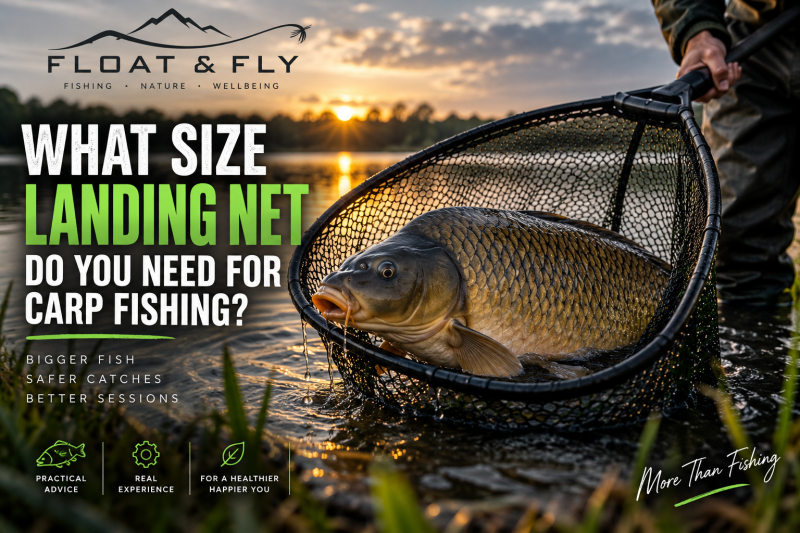
What size landing net should you buy for carp fishing?
For most UK carp anglers, 42 inches is the best all-round choice.
You only really need to move towards a 46 or 50-inch net if you’re regularly targeting much larger specimen fish or have a particular reason for needing the additional net width.
Don’t simply buy the biggest net you can find.
Buy the size that suits the fishing you actually do.
Float & Fly tip
Your landing net is the final part of the fight. Don’t let the last few seconds ruin a good session.
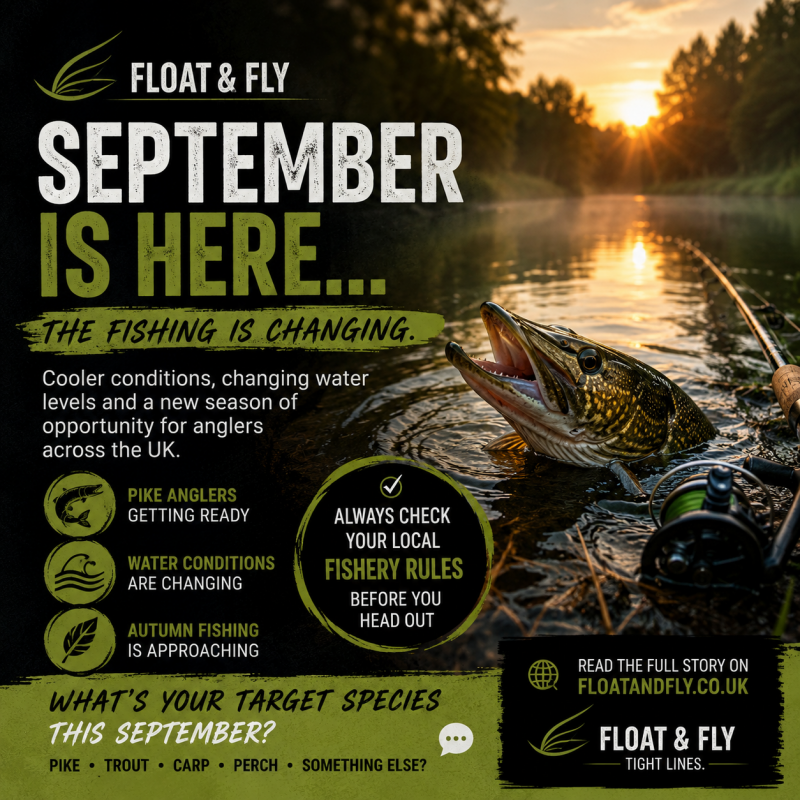
September Is Here: What Changes for UK Anglers?
September marks a big change in the fishing calendar. As summer begins to fade and cooler conditions arrive, anglers across the UK start looking towards some of the most anticipated fishing of the year.
For predator anglers, 1 September is particularly significant, with pike fishing reopening at some fisheries following their seasonal closures. However, rules vary between fisheries and regions, so anglers should always check the regulations for their chosen venue before heading out.
🎣 Pike season begins
The arrival of September gets plenty of predator anglers reaching for their pike tackle.
Cooler water and changing conditions can create new opportunities, but responsible fishing remains essential. Check your venue’s rules, make sure you’re equipped with appropriate tackle and handle fish carefully.
🌊 Don’t ignore water conditions
September doesn’t automatically mean perfect conditions everywhere.
Some fisheries are still dealing with low water levels, while others are beginning to benefit from cooler temperatures and changing weather. Recent fishery updates show just how different conditions can be between individual venues.
🐟 What should anglers be thinking about?
September is a good time to:
The Float & Fly verdict
September is when the fishing year starts to feel different.
The evenings get shorter, temperatures begin to fall and the opportunities change.
For us anglers, that’s not the end of summer.
It’s the beginning of another season.
Tight lines.
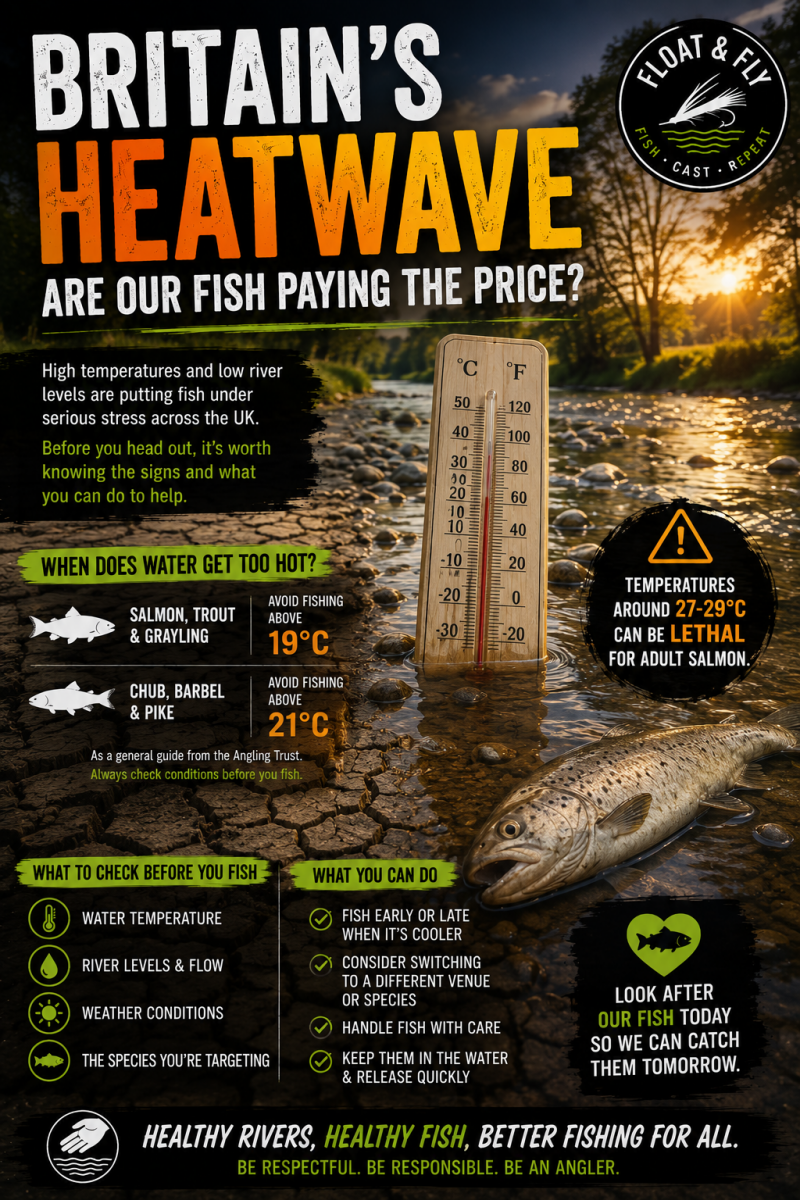
BRITAIN’S HEATWAVE: ARE OUR FISH PAYING THE PRICE?
For us anglers, hot weather can mean longer evenings, better conditions for some types of fishing and plenty of time beside the water.
But while we’re enjoying the sunshine, our fish can be dealing with a very different situation.
Across parts of the UK, high water temperatures and extremely low river levels are putting freshwater fish under serious pressure.
Wales has been particularly badly affected. Natural Resources Wales says the country remains in drought, with many rivers running exceptionally low for this time of year. July was also Wales’s driest July since records began around 190 years ago. (Natural Resources Wales)
And it’s not just the lack of water that’s worrying.
🌡️ WHEN DOES WATER GET TOO HOT?
Fish rely on the water around them to regulate their body temperature, and warmer water also holds less oxygen.
That means a fish which looks perfectly healthy when you release it can still struggle afterwards if conditions are poor.
The Angling Trust recommends checking water temperatures before fishing during hot weather. As a general guide, anglers are advised to consider avoiding salmon, trout and grayling when river temperatures rise above 19°C, while large chub, barbel and pike can also become vulnerable above 21°C. (Angling Trust)
In Wales, Natural Resources Wales advises that salmon and sea-trout fishing should stop when river temperatures reach 20°C, because the risk of fish dying after release becomes much greater. (Nation.Cymru)
🐟 SALMON ARE PARTICULARLY VULNERABLE
Salmon need cold, clean, well-oxygenated water.
This summer has created a nasty combination of low flows and high temperatures, reducing the amount of suitable habitat available to them.
The lower River Wye reached a staggering 27.7°C during the June heatwave.
According to Natural Resources Wales, temperatures around 27–29°C can become lethal for adult salmon. (Nation.Cymru)
The concern isn’t just about fish being caught by anglers.
Low river levels can reduce the amount of habitat available to returning salmon, while warmer conditions can also affect the survival of young fish and even salmon eggs later in the year.
🎣 SO WHAT SHOULD ANGLERS DO?
This doesn’t mean you have to put the fishing gear away every time the sun comes out.
It means knowing when conditions have become unsuitable for the fish you’re targeting.
Before heading out, check:
🌡️ Water temperature
💧 River levels and flow
☀️ Weather conditions
🐟 The species you’re targeting
If temperatures are too high, consider switching to a cooler venue, targeting species that are less vulnerable to the conditions or simply giving the fish a break.
And if you do fish in warm conditions, handle your catch carefully, keep it in the water as much as possible and get it released quickly.
🌳 THERE ARE SOME REASONS FOR HOPE
It’s not all bad news.
Natural Resources Wales says projects such as restoring peatlands and planting trees alongside rivers can help retain water, improve water quality and provide shade.
That could help make rivers more resilient when the next spell of extreme weather arrives. (Nation.Cymru)
But with hot and dry conditions becoming an increasingly familiar part of summer fishing, understanding the effect on our fish is becoming just as important as knowing where to cast.
🤔 WHAT DO YOU THINK?
Have you noticed a difference in your local rivers this summer?
Are your usual waters running lower than normal?
And would you stop fishing if the water temperature reached a level that could put the fish at risk?
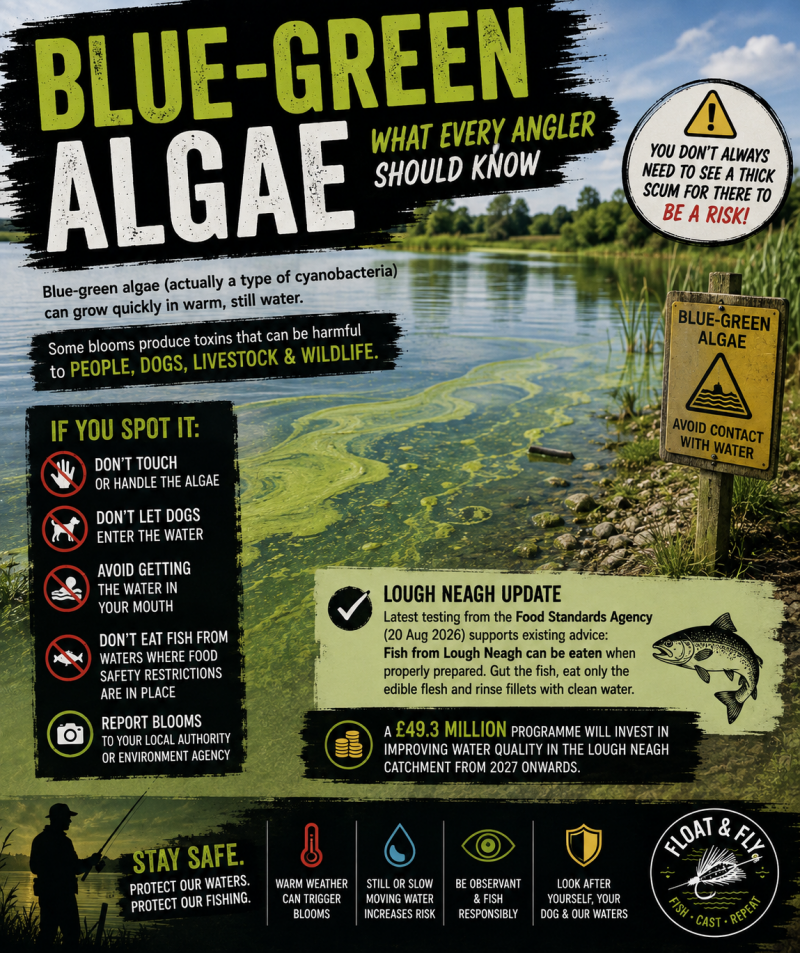
🟢 BLUE-GREEN ALGAE — WHAT EVERY ANGLER SHOULD KNOW 🎣
With warm weather and low water levels around parts of the UK, blue-green algae is something anglers should be keeping an eye out for.
Despite the name, blue-green algae is actually a type of cyanobacteria. Under the right conditions it can multiply rapidly, creating thick green, blue-green or even brown-looking scums on the surface of lakes, lochs, reservoirs and canals.
⚠️ WHY SHOULD ANGLERS CARE?
Some blooms can produce toxins that are harmful to people, dogs, livestock and wildlife. Contact with contaminated water can cause skin irritation, while swallowing contaminated water can cause illness. (Canal & River Trust)
And here’s something worth remembering:
You don’t always need to see a massive green carpet on the water for there to be a risk. Blooms can change and move, so anglers should take precautions whenever they suspect blue-green algae is present.
🎣 IF YOU SPOT IT WHILE FISHING:
🚫 Don’t touch or handle the algae
🚫 Don’t let dogs enter the water
🚫 Avoid getting the water in your mouth
🚫 Don’t eat fish from waters where specific food-safety restrictions are in place
📸 If you think you’ve found a bloom, report it through the appropriate local authority or environmental reporting service. (DAERA)
🐟 WHAT ABOUT LOUGH NEAGH?
Lough Neagh has been dealing with major blue-green algae problems since 2023. However, there is some positive news for anglers: the Food Standards Agency’s latest testing, published 20 August 2026, says its results support the continuation of existing advice that fish from Lough Neagh can be eaten when properly prepared. Recreational anglers are advised to eat only the edible flesh, properly gut the fish and rinse the fillets with clean water. (GOV.UK)
A major £49.3 million programme has also been announced to improve water quality in the Lough Neagh catchment from 2027 onwards. (Water Magazine)
🤔 HAVE YOU SEEN BLUE-GREEN ALGAE WHILE FISHING?
Have you ever arrived at your favourite loch, lake or reservoir and found the water covered in algae?
Would you still fish it, or pack the gear away and find somewhere else?
👇 Tell us where you’ve seen it.
#FloatAndFly #BlueGreenAlgae #FishingNews #AnglingNews #UKFishing #ScottishFishing #LoughNeagh #FishingSafety #Anglers #FishingCommunity #FishOn
Let’s Build the Ultimate Map
Angling is all about community. By sharing your wins (and even your tough days), we can build a modern, honest guide to the best freshwater fishing around.
Scroll down to the comments section below and tell us: Where should we cast a line next? We will add your fishing spot to our fishing destinations page.

Create Your Own Website With Webador